SlideCrafter AI
A local-first presentation compiler that turns probabilistic model output into structured, editable decks.
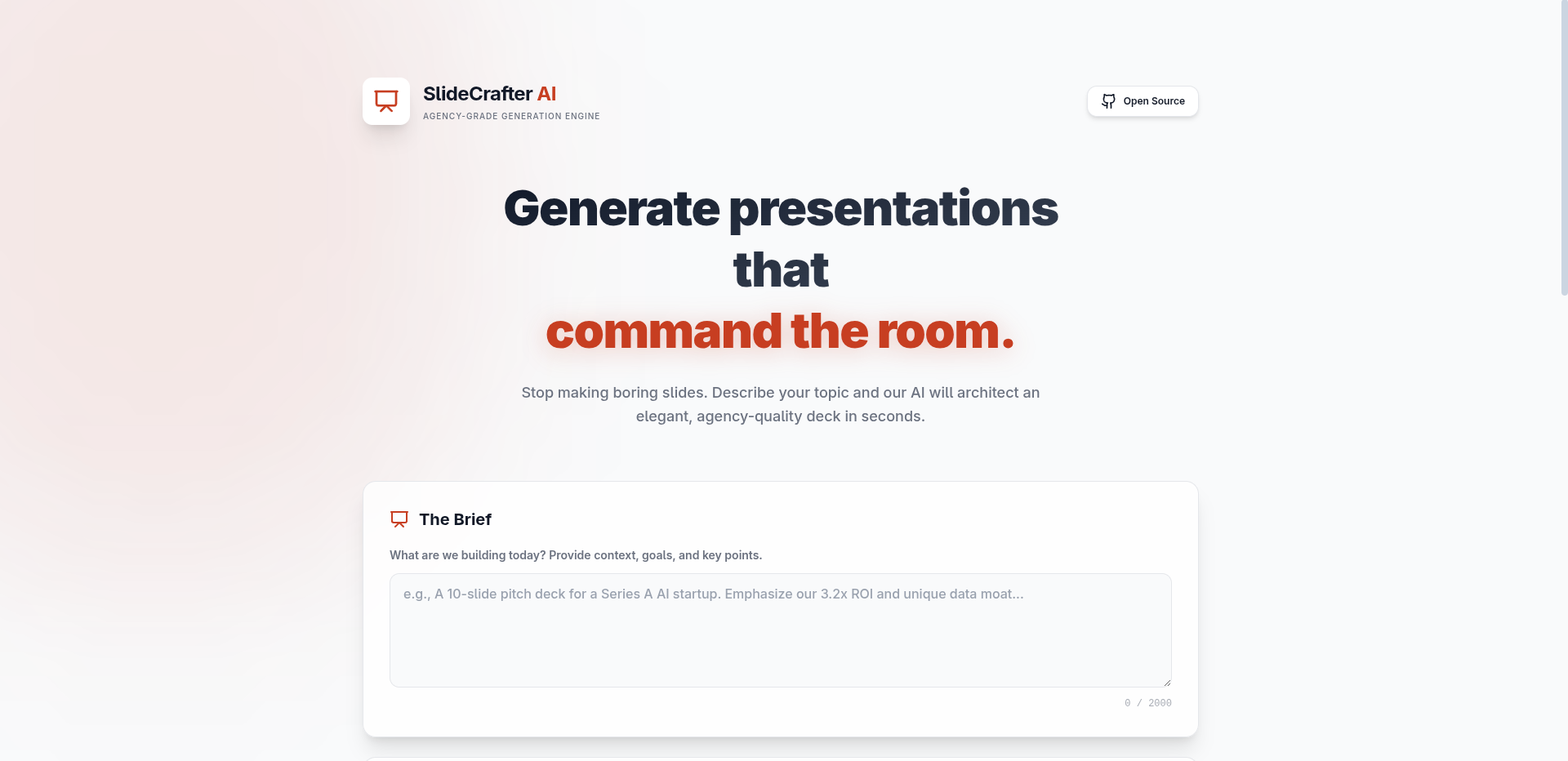
title: "SlideCrafter AI: Deterministic Presentation Compiler" excerpt: "Turning messy research context into structured PowerPoint decks by treating deck generation as a compiler problem." date: "Nov 2025 - Present" stage: "production" readTime: "7 min read" stack: ["React", "TypeScript", "Vite", "PptxGenJS", "Gemini API"] liveUrl: "https://slidecrafter-ai.vercel.app"
1. What problem does this product solve?
SlideCrafter AI Pro was built to solve a recurring failure in knowledge work: converting raw research (PDFs, spreadsheets, notes) into structured, persuasive presentations with visual hierarchy.
Most AI slide generation tools ask an LLM to generate "complete slides" as HTML or raw text. This approach consistently fails: LLMs output broken layouts, overlapping text, hallucinated slide coordinates, or unparseable markup that cannot be exported to real Microsoft PowerPoint formats (.pptx).
SlideCrafter AI solves this by treating presentation generation as a compiler problem:
- The AI model is not asked for final slides; it outputs a strictly typed Intermediate Representation (JSON AST payload).
- A deterministic client-side compilation engine validates theme primitives, slide navigation, and layout constraints.
- The engine programmatically draws the slide deck using
PptxGenJS, producing clean, native, fully editable binary.pptxfiles.
2. Impact on Society (How people benefit)
- Saves Knowledge Workers Hundreds of Hours: Academic researchers, students, and founders can turn 30-page research documents into editable, structured presentation decks in under 60 seconds.
- 100% Native PowerPoint Compatibility: Unlike tools that export static PDFs or proprietary web decks, SlideCrafter exports standard
.pptxfiles that can be edited inside PowerPoint, Keynote, or Google Slides. - Local-First Privacy: Document processing and compilation happen close to the user, keeping raw slide rendering local.
3. User Count
Active web deployment used by students, researchers, and project teams generating hundreds of presentation decks monthly.
4. Tech Stack
- Frontend & App Engine: React 18, TypeScript, Vite
- Compilation & Export Engine: PptxGenJS
- LLM Ingestion & Inference: Google Gemini API (with JSON Schema enforcement)
- Document Parsing: PDF.js & PapaParse
5. Justification of Tech Stack
The Bottleneck of Legacy Approaches:
Existing "AI Presentation Generators" rely on cloud-heavy server backends that render slides as static images or HTML canvas elements. This creates two massive bottlenecks:
- Broken PowerPoint Interoperability: Users cannot edit individual shapes, colors, or text boxes inside native presentation software.
- Server Costs & Latency: Generating high-resolution slide renders on a server requires expensive headless browser instances (Puppeteer/Playwright) with high latency.
Why this stack:
- PptxGenJS (Compilation Engine): PptxGenJS allows constructing
.pptxfiles using pure JavaScript objects in the browser. By mapping the AI's JSON AST output directly toPptxGenJSAPI commands, the compilation executes in milliseconds with zero server overhead. - TypeScript & Zod AST Validation: Every LLM response is parsed against a strict Zod schema. If the model strays or drift occurs, an automated repair loop fixes the payload before compilation, preventing corrupted file exports.
- Vite & React: Provides an instant, responsive UI for real-time slide theme customization and immediate previewing before final
.pptxdownload.